How the sender stages work
Start with two letters
E is one dot and T is one dash. Each of the twenty-two stages adds a letter or two and drills them in real words, giving more of the letters you keep missing. A stage is done when you get 30 letters in a row right.
Using the chart
A dot moves right on the tree and a dash moves left, then each element follows a branch down. Finding a letter that way is slow at first, so the rhythm check can be relaxed or turned off in settings. Once a letter comes without looking, turn the chart off and send from memory.
Listen as well as send
Operators read Morse by ear, as a rhythm, not by counting dots. The Receiver tests play each letter at full character speed so you learn the sound of the whole letter. If you cannot use sound, it can flash a light instead.
What Morse code is
Morse code spells out text with two signals, a short one and a long one, usually called dot and dash. Timing carries the rest of the meaning. A dash lasts three times as long as a dot, the gap inside a letter is one dot long, the gap between letters is three, and the gap between words is seven. Because of that, the same code works as a tone, a flashing lamp, a buzzer or taps on a table.
International Morse
The version taught here is International Morse, standardised by the International Telecommunication Union. It grew out of the code Samuel Morse and Alfred Vail used on American telegraph lines in the 1840s, which was revised in Europe to drop its uneven spacing. The reference chart lists every letter, number and the common punctuation and procedure signals.
Who still uses it
Amateur radio operators send Morse every day, because a narrow tone gets through noise and weak conditions that defeat voice. Aviation radio beacons still identify themselves by keying a short call sign in Morse. And because it needs only one switch, Morse has long been used as a way to type for people who cannot use a keyboard.
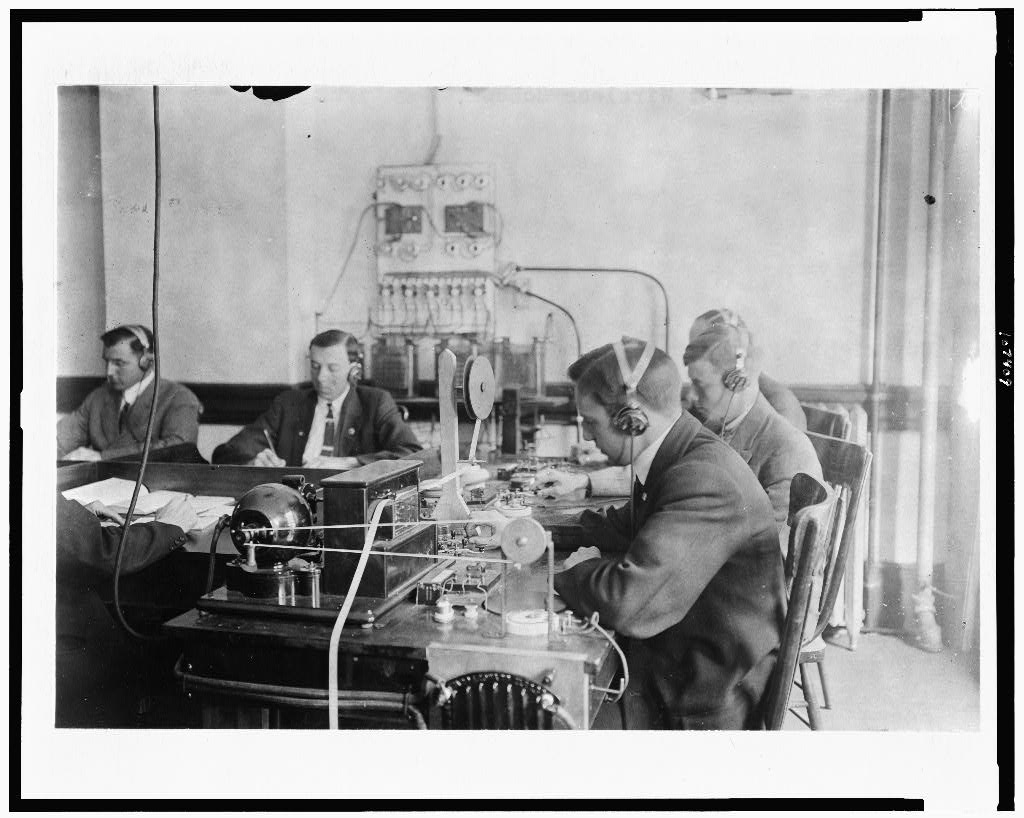
History
How the code was invented and spread: Morse and Vail's first line in 1844, the needle telegraphs used on British railways, the Atlantic cable of 1866, and the wireless operators who made SOS the distress call.
Read the history articles