History
How the code was invented, and the people who used it at sea, at war and at work.
1837–1865
Needle telegraphs and the road to International Morse, 1837–1865
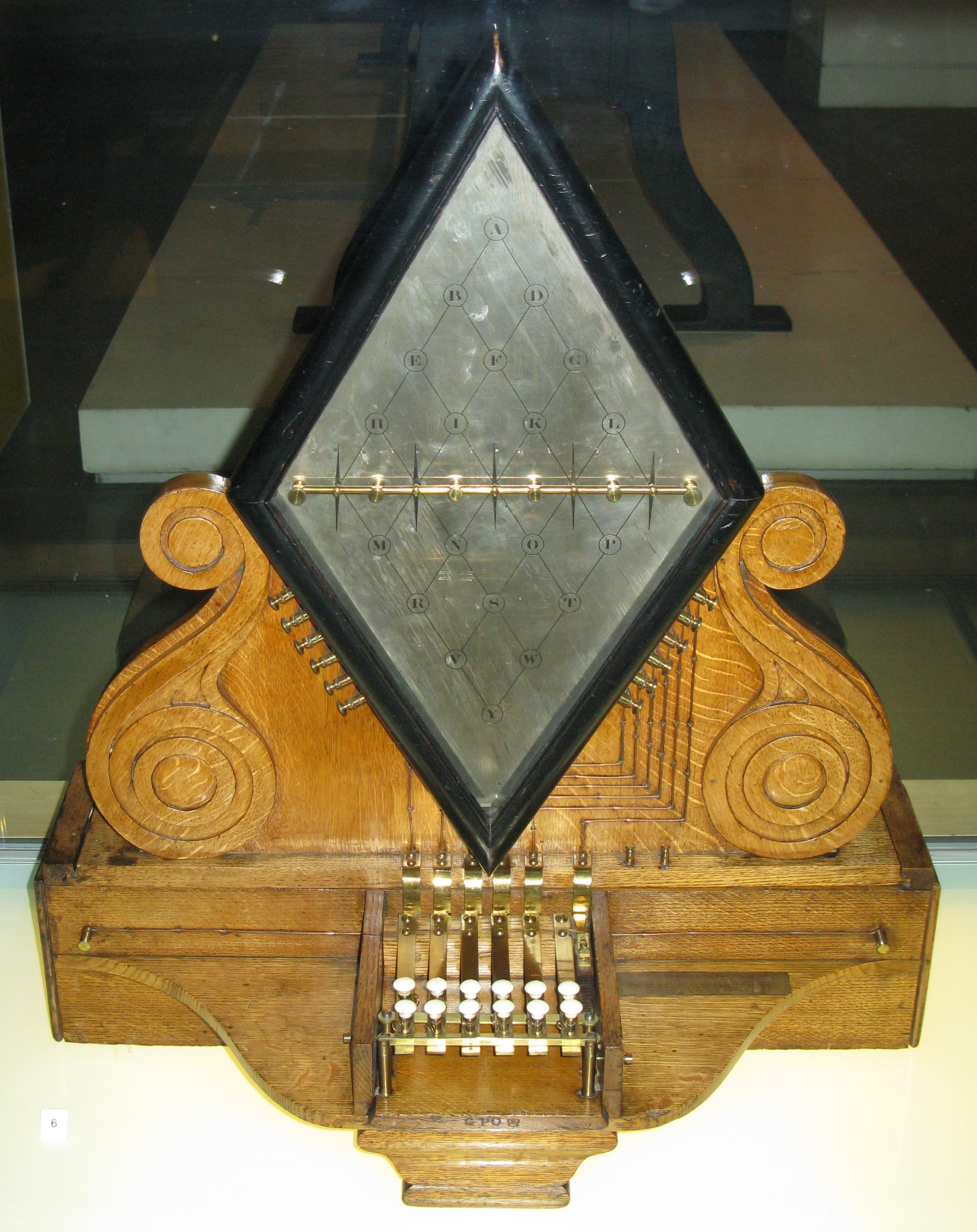
Cooke and Wheatstone’s needle instruments on British railways, the competing systems on the Continent, and how a revised Morse code became the international standard.
1844
The first American telegraph line, 1844
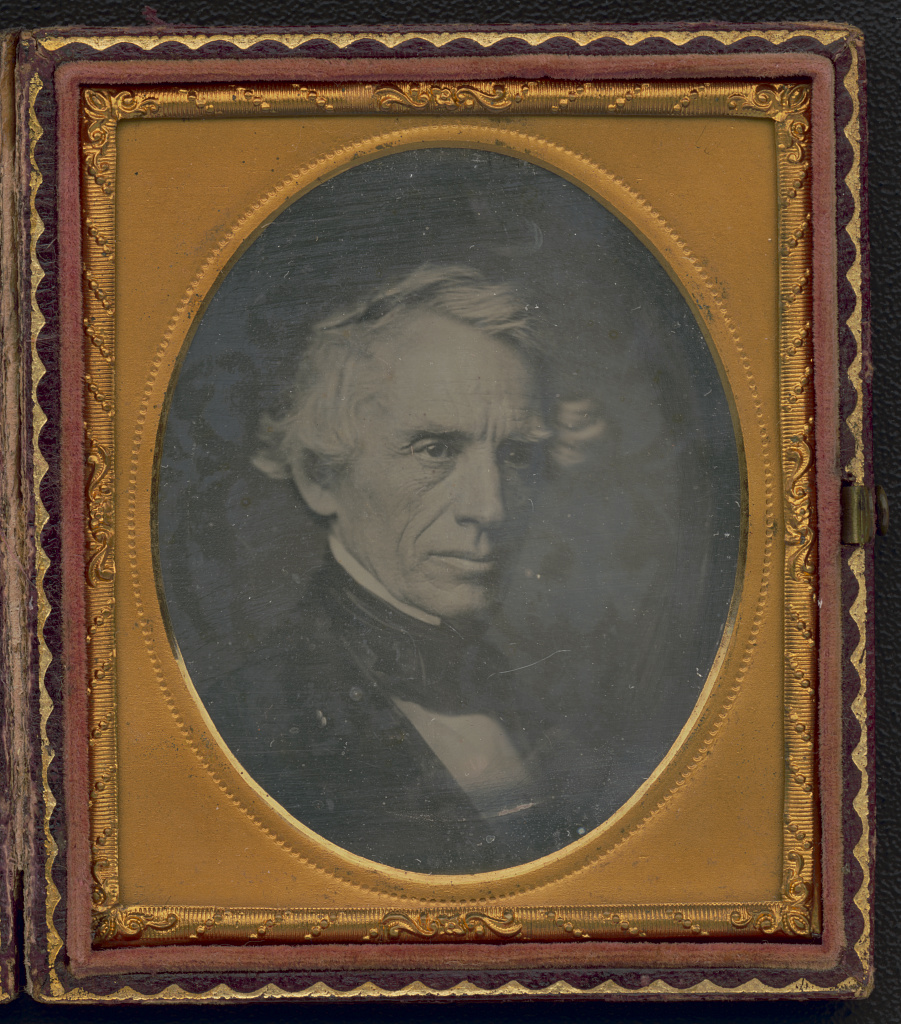
How Samuel Morse, Alfred Vail, Leonard Gale and Francis Smith built the Washington–Baltimore line, and how the code it carried took shape.
Everyday use · 1846–1883
Women telegraph operators in the nineteenth century
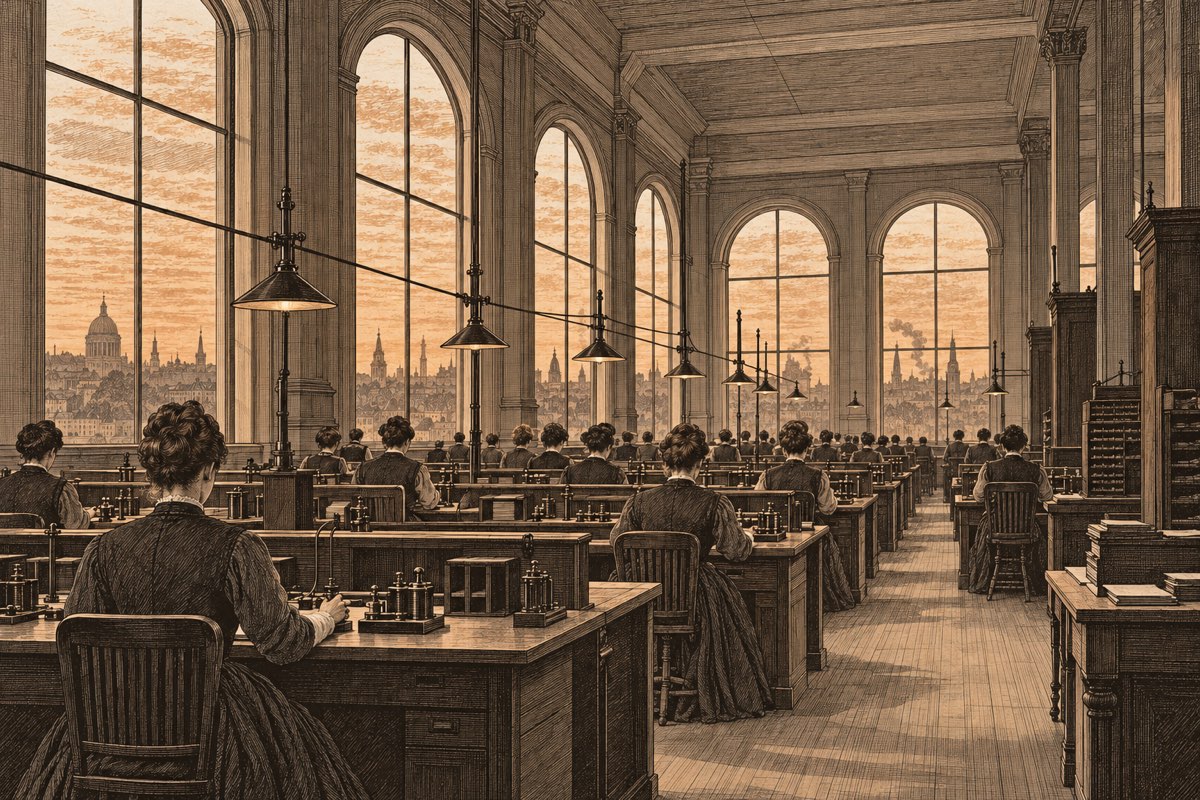
How women entered telegraph work from 1846, what they were paid, and how they took part in the labour disputes of the 1880s.
Everyday use · 1851–1960s
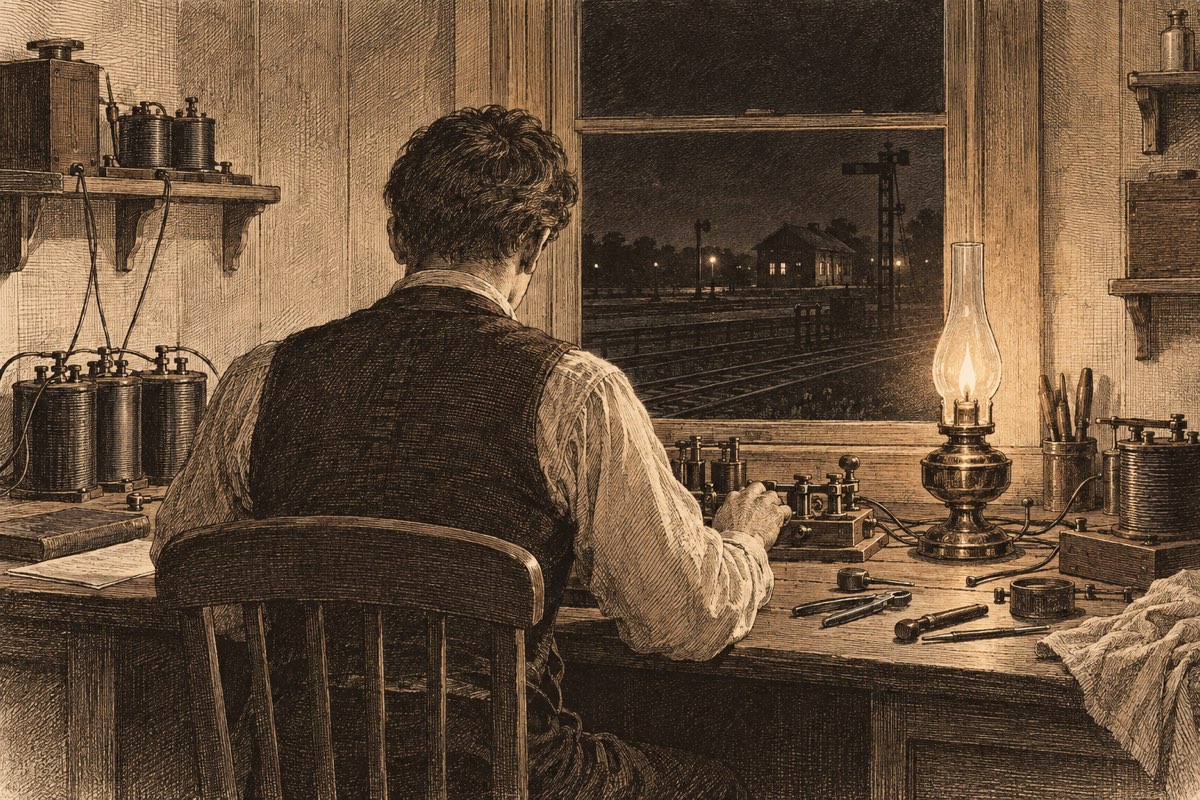
Railway telegraphers and train orders
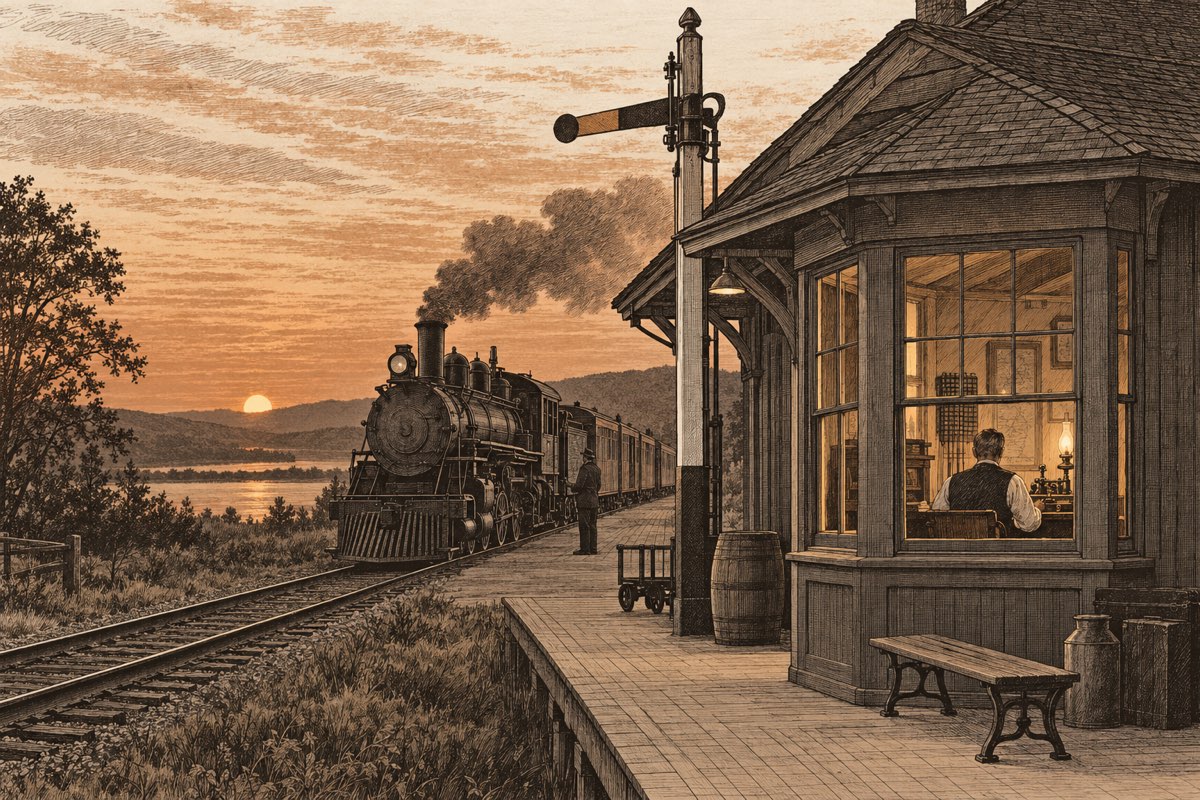
How North American railways used telegraph operators and written train orders to run trains on single-track lines for more than a century.
Everyday use · 1857–1912
The origins of 73, 88 and the Q codes
Where operator shorthand such as 73, 88, 30 and the three-letter Q codes came from, and how amateurs still use them.
Everyday use · 1860–1861
The Pacific telegraph and the end of the Pony Express
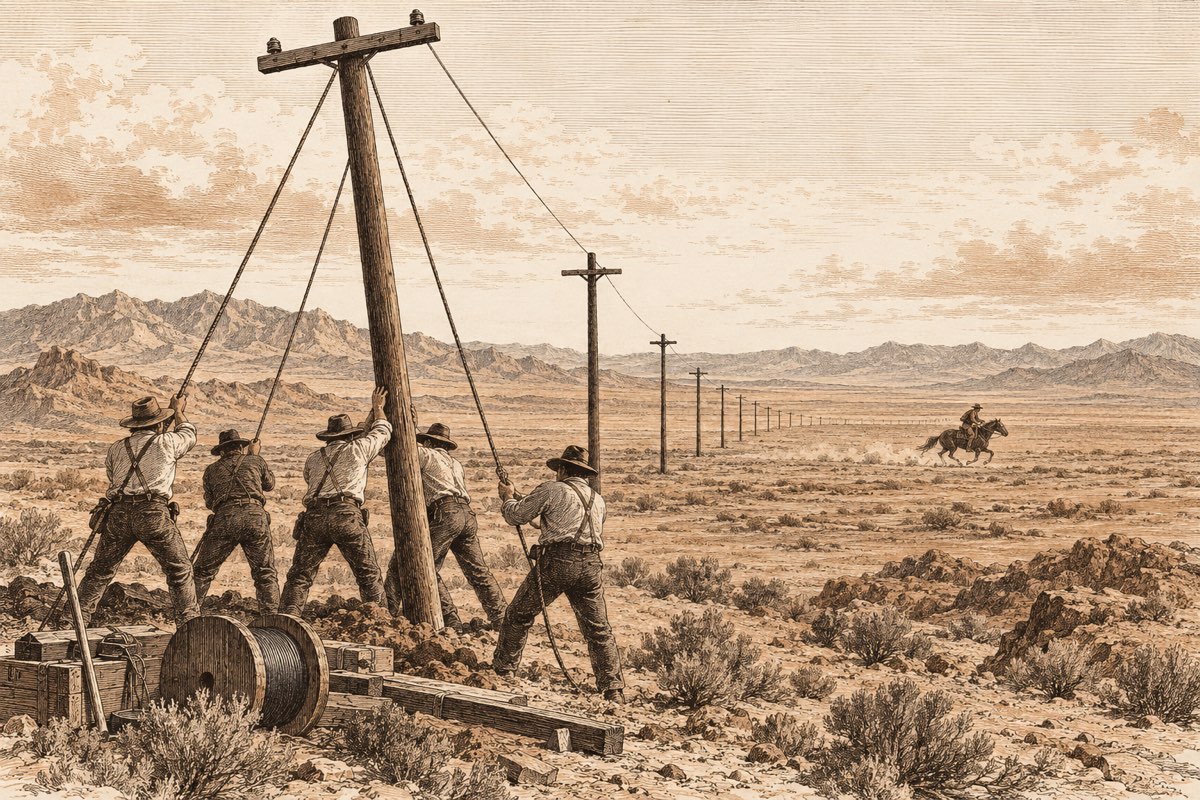
How a subsidised telegraph line reached California in October 1861 and made the Pony Express redundant after eighteen months of service.
At war · 1861–1866
The United States Military Telegraph in the Civil War
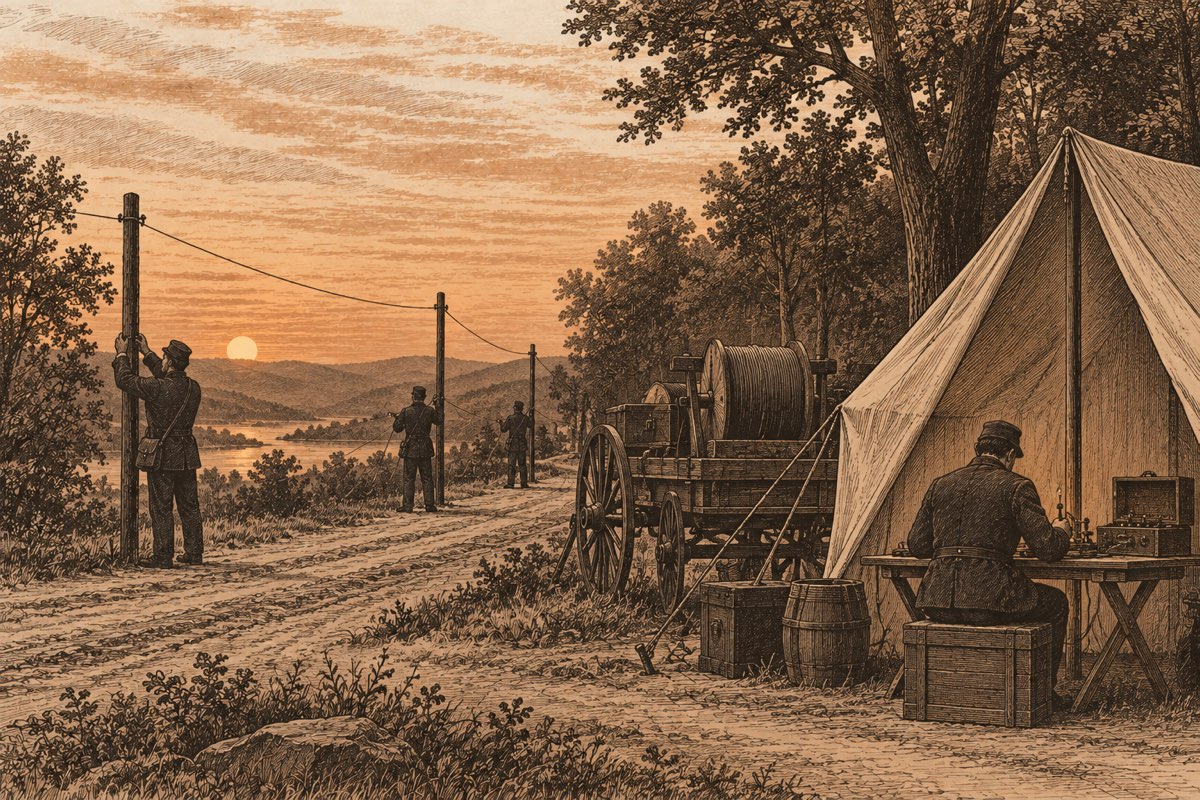
How a corps of civilian telegraph operators built and ran the Union army’s telegraph network, and how both sides tried to read and imitate each other’s messages.
At war · 1862–1865
Lincoln in the War Department telegraph office
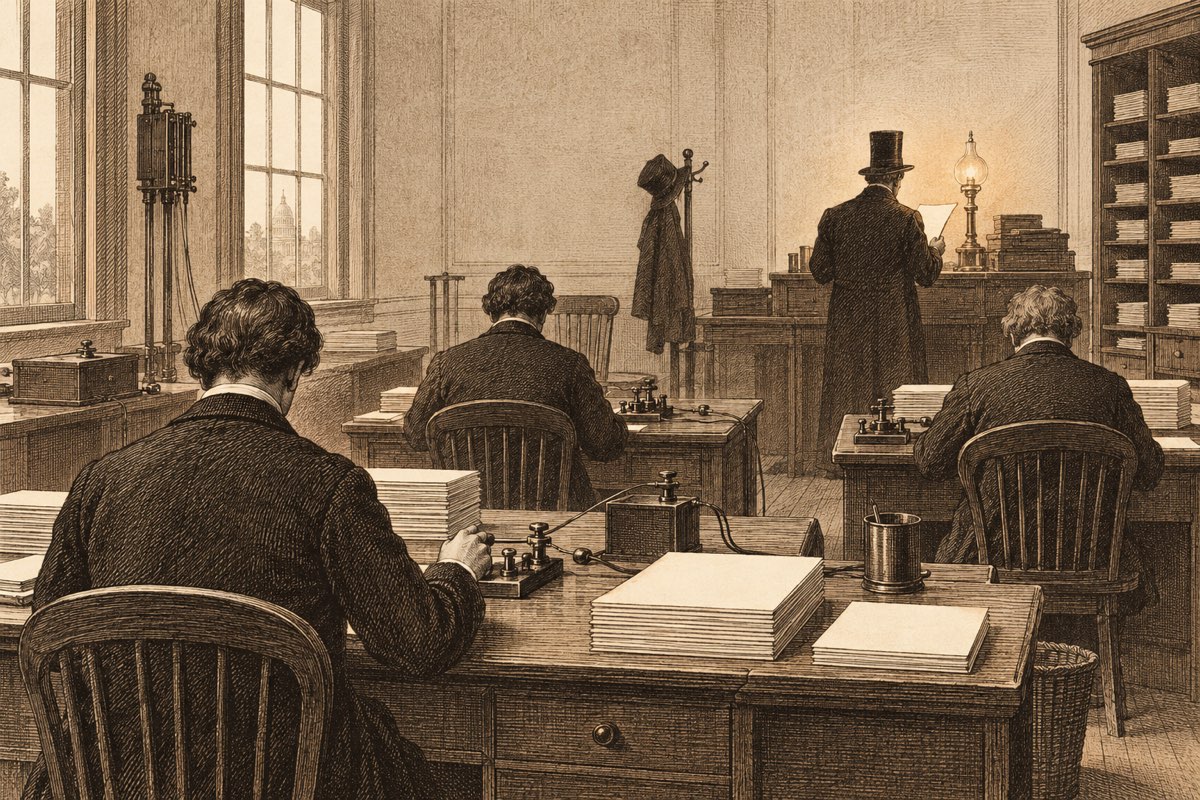
How Abraham Lincoln followed the Civil War from a room of telegraph operators next to the White House, and what the operators who worked there recorded about him.
Everyday use · 1862–1869
Thomas Edison’s years as a telegraph operator
How Thomas Edison learned Morse at a Michigan railway station and spent six years as a travelling operator before his first patent.
1866
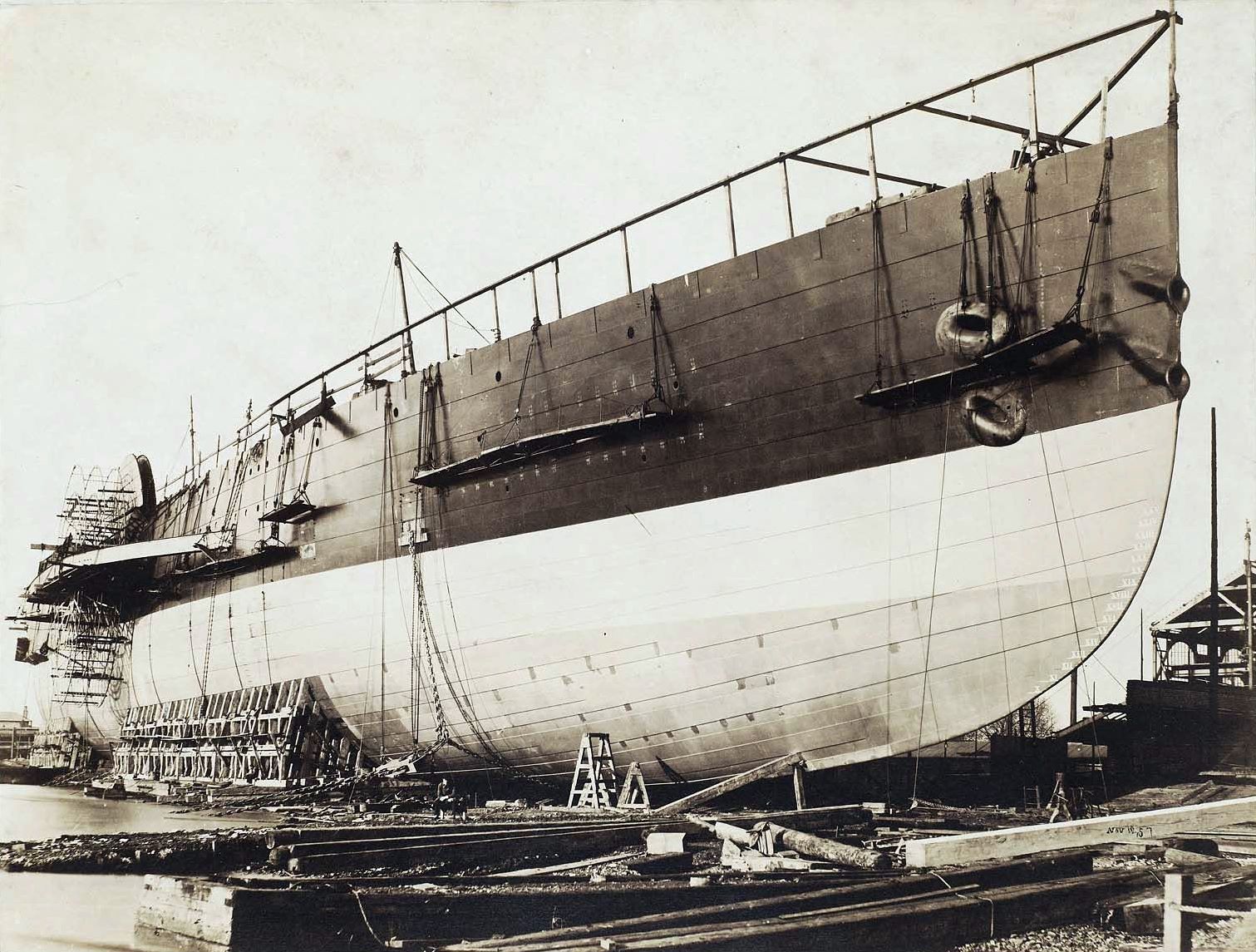
The Atlantic telegraph cables, 1857–1866
The failed cables of 1857, 1858 and 1865, the working line landed at Heart’s Content in 1866, and how operators read signals across the ocean.
At sea · 1867–1945
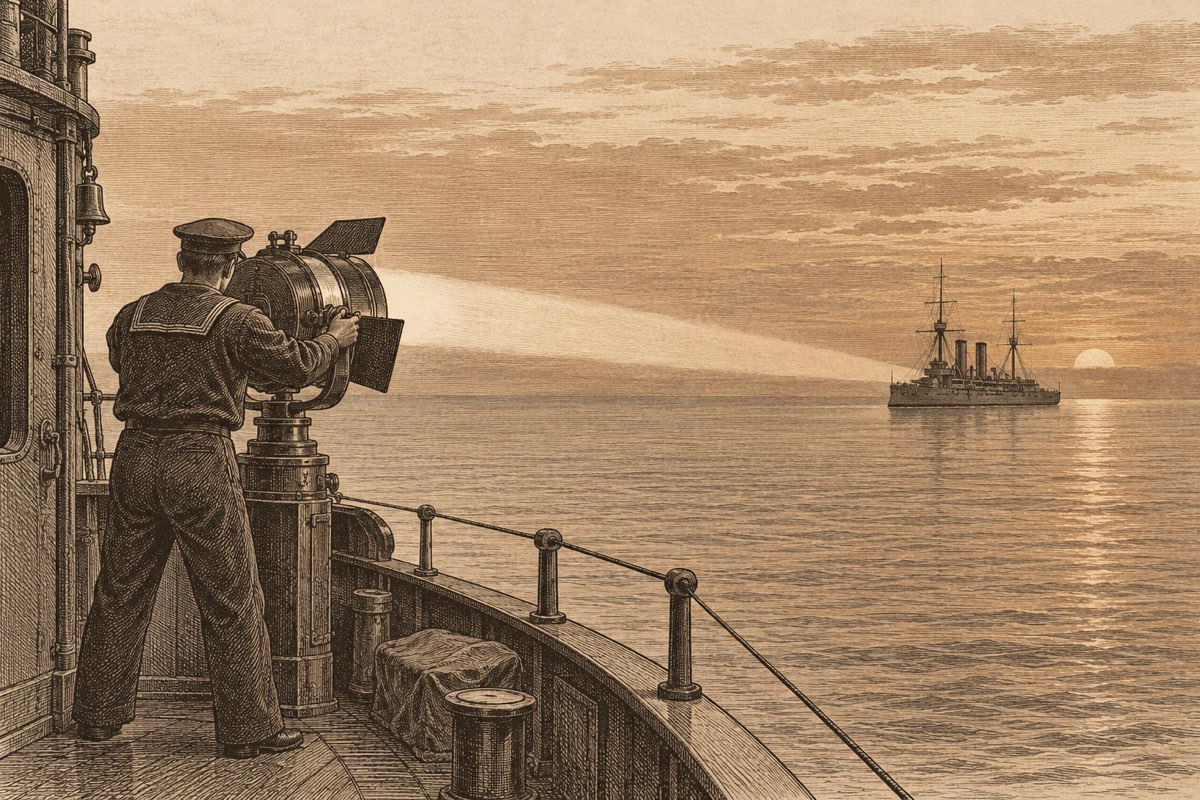
Signal lamps: Morse by light between ships
How navies and merchant ships came to send Morse with flashing lamps, how the Aldis lamp worked, and why lamps mattered most when radio had to stay silent.
Everyday use · 1870–1872
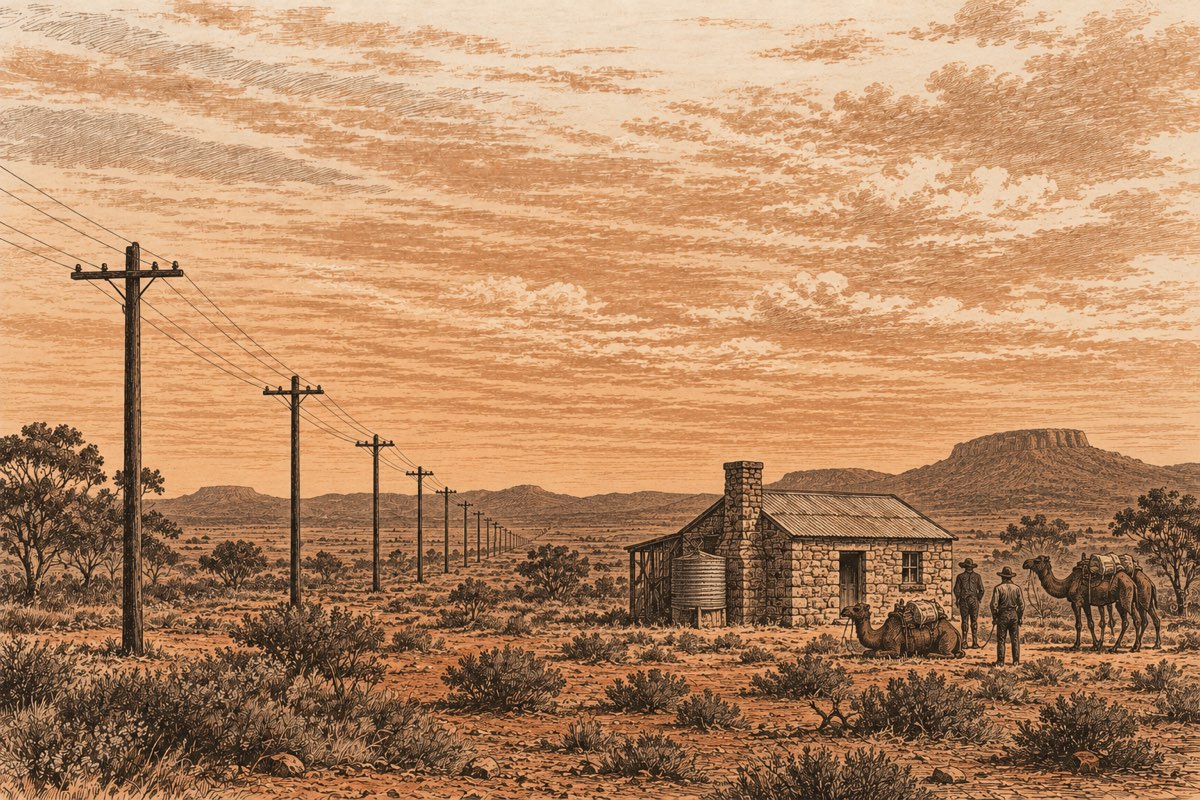
Australia’s Overland Telegraph Line
How South Australia built a 3,200-kilometre telegraph line from Port Augusta to Darwin and connected the Australian colonies to London by wire in 1872.