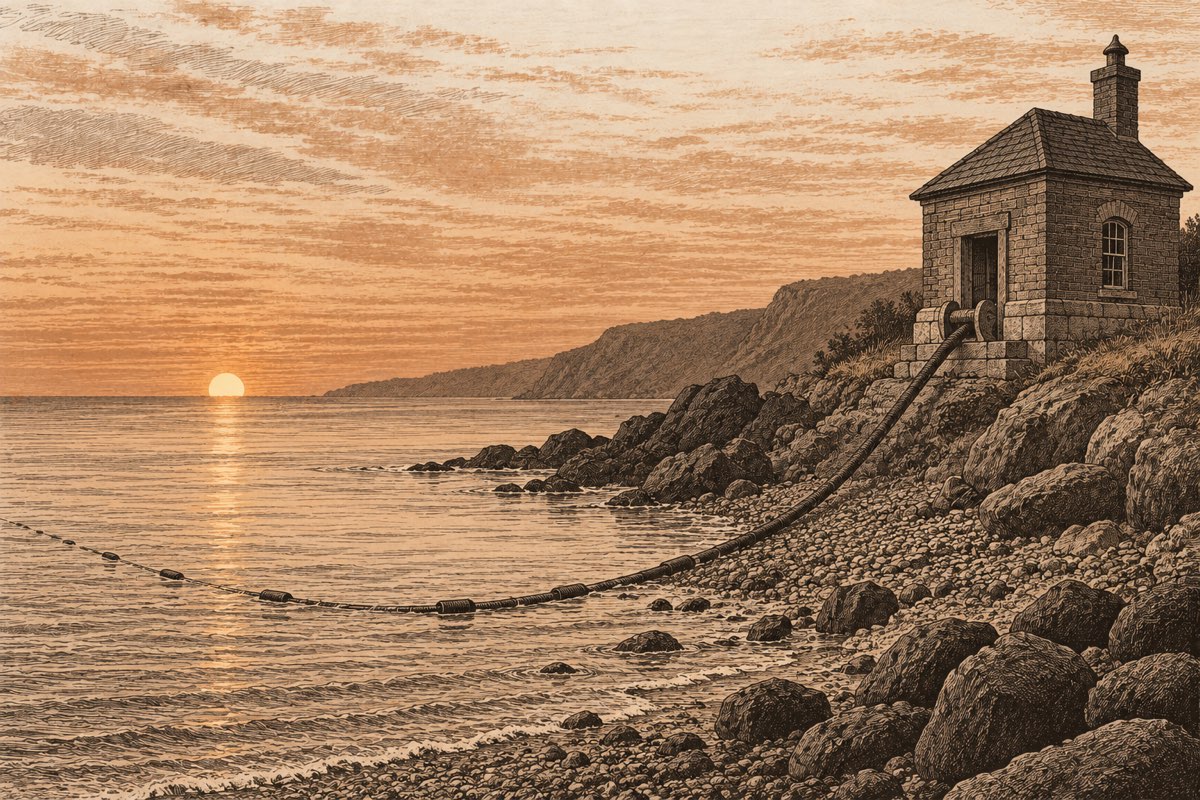
A message with no cable of its own
In August 1914, in the first days of the war, a British cable ship cut Germany’s submarine telegraph cables in the North Sea. From then on Germany had no cable of its own to the Americas. It could use powerful radio transmitters, which anyone could hear, or ask neutral governments to carry its diplomatic messages.
In early 1917 the United States was one of those neutrals. President Woodrow Wilson, hoping to broker peace, had allowed the German embassy in Washington to send and receive enciphered messages over the State Department’s own diplomatic cable route. German traffic was handed to the American embassy in Berlin and sent on with American diplomatic messages.
The route
On 16 January 1917 the German Foreign Secretary, Arthur Zimmermann, sent a telegram to his ambassador in Washington, Count Johann von Bernstorff, for forwarding to the German minister in Mexico, Heinrich von Eckardt. It said that Germany would resume unrestricted submarine warfare on 1 February and that, if the United States entered the war, Mexico should be offered an alliance and financial support, with the prospect of recovering Texas, New Mexico and Arizona.
The message was enciphered in a German diplomatic code known as 0075, delivered to the American embassy in Berlin, and sent by diplomatic cable to Copenhagen, then to London, and on across the Atlantic to Washington. The State Department received it on 17 January and passed it to Bernstorff on 18 January. Older accounts say Germany also sent copies by the “Swedish roundabout”, a route through neutral Sweden’s diplomatic service, and by radio. Later research in the German Foreign Office’s records has found evidence only for the American route, and historians now treat the three-route story with caution.
The cables between Britain and North America landed at relay stations in the south-west of England, where traffic was copied for British naval intelligence. The German message was on its way to Room 40, the Admiralty’s codebreaking section, before it reached Washington.
Room 40
Two Room 40 cryptanalysts, Nigel de Grey and William Montgomery, worked on the intercept. Code 0075 was relatively new and only partly reconstructed, so the partial decryption de Grey had by 17 January had gaps, but it was enough to show what the message offered. The head of naval intelligence, Admiral William Reginald Hall, had a problem: publishing it would show the Americans that Britain was reading traffic on their own diplomatic cable.
Bernstorff solved it for him. On 19 January he forwarded the message to Mexico City by commercial telegraph through Western Union, re-enciphered in an older code, 13040, which Room 40 could read much more fully. On 10 February a British agent in Mexico, known as “Mr H”, obtained a copy of this version from the Mexico City telegraph office. It differed in its date, address and signature from the Berlin version, which gave Britain a plausible story that the text had been obtained in Mexico.
Publication
On 23 February the Foreign Secretary, Arthur Balfour, handed the text to the American ambassador in London, Walter Hines Page, and Page cabled it to Washington the next day. Wilson released it to the press, and it appeared in American newspapers on 1 March 1917. Many readers suspected a British forgery until 3 March, when Zimmermann publicly admitted he had written it. The United States declared war on Germany on 6 April 1917.
The telegram itself was a block of numbers. Each number stood for a word or syllable in a codebook, and at every leg of its journey it was sent as telegraph signals and copied by operators who had no idea what it said. Britain read it by obtaining the same message in two codes from two routes.